
Client’s feedback
Client’s feedback
They've been amazing to work with, have made the process easy, brainstormed on UX ideas with us, and truthfully played as an extension of our team. All that to say, if you're looking for a design/dev agency that's damn good at what they do, check them out.



Troy Munson
Troy Munson
CEO @ Dimmo
CEO @ Dimmo
Product
Product


Website
Website


The Problem Nobody Was Talking About
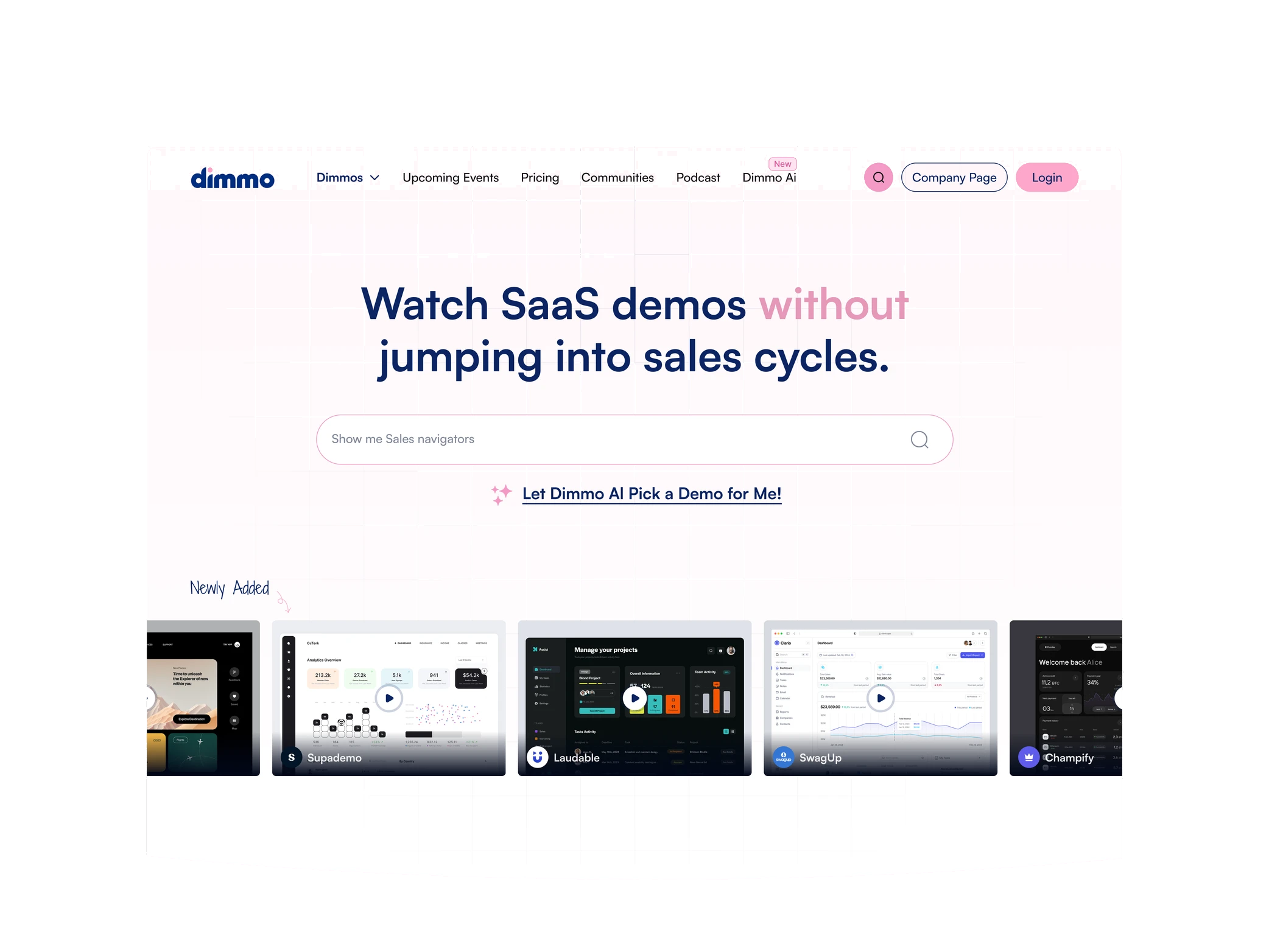
When Troy Munson came to us, Dimmo had a problem that sounds deceptively simple: nobody understood what they actually did.
The product was solid — a platform where you could evaluate sales tools, compare features, watch demos, and make smarter software buying decisions. Over 500 SaaS tools listed. Real value. Real utility.
But the design? It was telling a completely different story.
The old interface was cluttered, the hierarchy was off, and the UX made the platform feel like an afterthought rather than a product people would trust with purchasing decisions. Worse, the market was starting to lump Dimmo in with "another vibe coding tool" — which is basically a death sentence for a platform whose entire value proposition is credibility and evaluation.
Here's the thing about perception: you can have the best product in the world, but if the design makes you look like a weekend side-project, that's exactly how people will treat you.
The Problem Nobody Was Talking About
When Troy Munson came to us, Dimmo had a problem that sounds deceptively simple: nobody understood what they actually did.
The product was solid — a platform where you could evaluate sales tools, compare features, watch demos, and make smarter software buying decisions. Over 500 SaaS tools listed. Real value. Real utility.
But the design? It was telling a completely different story.
The old interface was cluttered, the hierarchy was off, and the UX made the platform feel like an afterthought rather than a product people would trust with purchasing decisions. Worse, the market was starting to lump Dimmo in with "another vibe coding tool" — which is basically a death sentence for a platform whose entire value proposition is credibility and evaluation.
Here's the thing about perception: you can have the best product in the world, but if the design makes you look like a weekend side-project, that's exactly how people will treat you.
The Problem Nobody Was Talking About
When Troy Munson came to us, Dimmo had a problem that sounds deceptively simple: nobody understood what they actually did.
The product was solid — a platform where you could evaluate sales tools, compare features, watch demos, and make smarter software buying decisions. Over 500 SaaS tools listed. Real value. Real utility.
But the design? It was telling a completely different story.
The old interface was cluttered, the hierarchy was off, and the UX made the platform feel like an afterthought rather than a product people would trust with purchasing decisions. Worse, the market was starting to lump Dimmo in with "another vibe coding tool" — which is basically a death sentence for a platform whose entire value proposition is credibility and evaluation.
Here's the thing about perception: you can have the best product in the world, but if the design makes you look like a weekend side-project, that's exactly how people will treat you.
What We Actually Did
We embedded ourselves with Troy's team — brainstorming sessions, UX audits, deep-dives into how users actually navigate software evaluation. We weren't just designing screens; we were answering a harder question: How do you make a platform with 500+ listed tools feel simple, trustworthy, and worth someone's time?
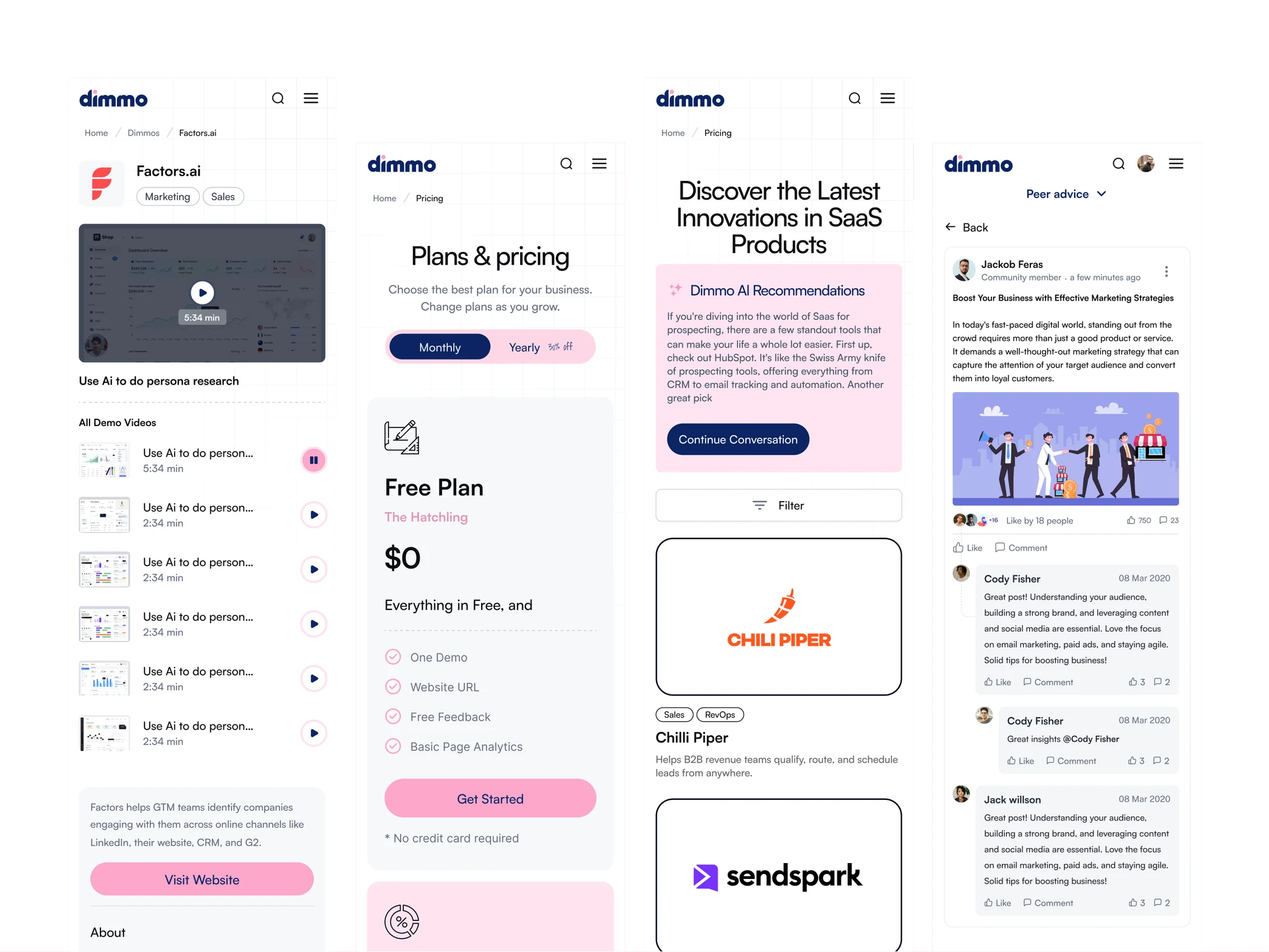
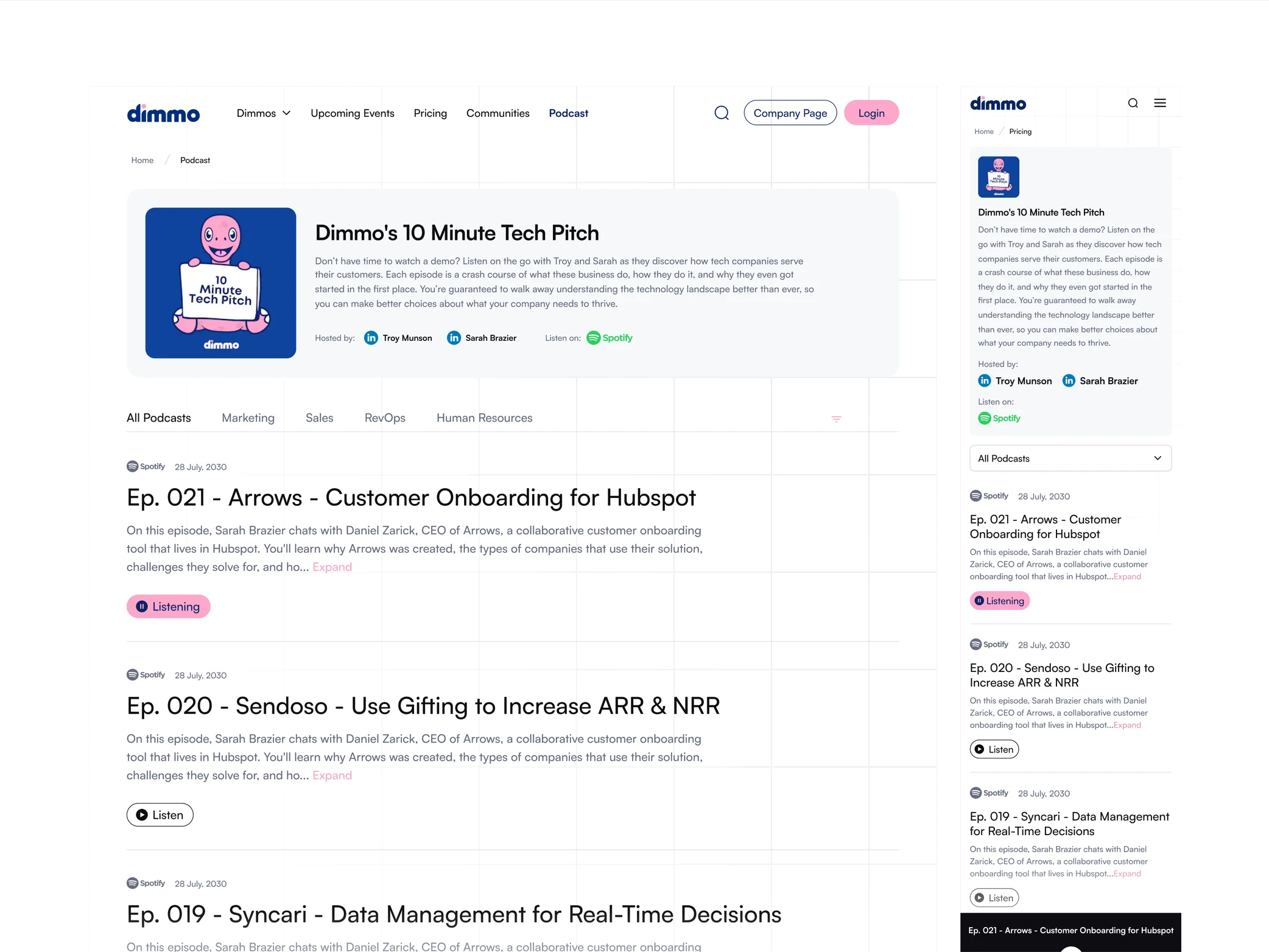
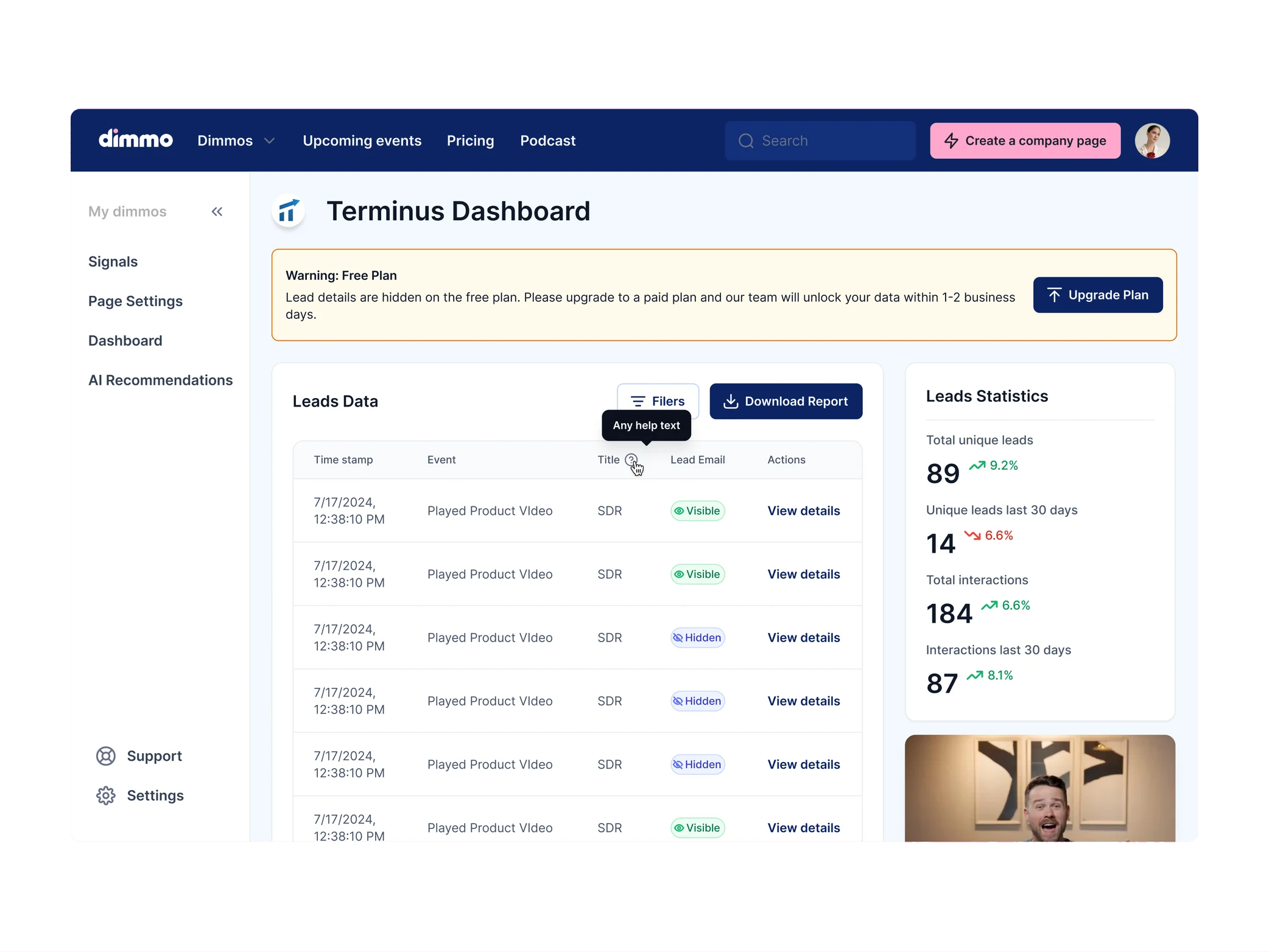
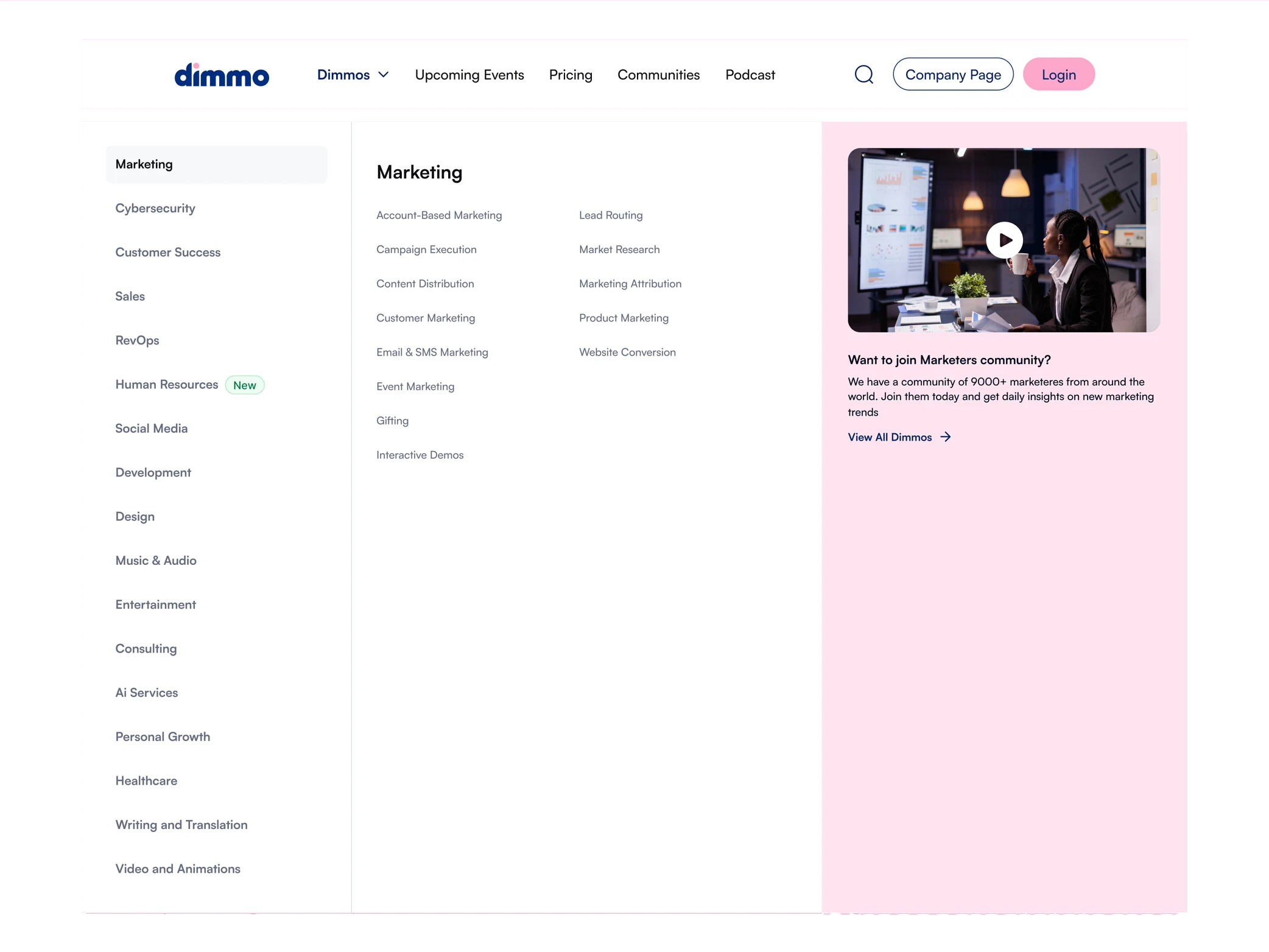
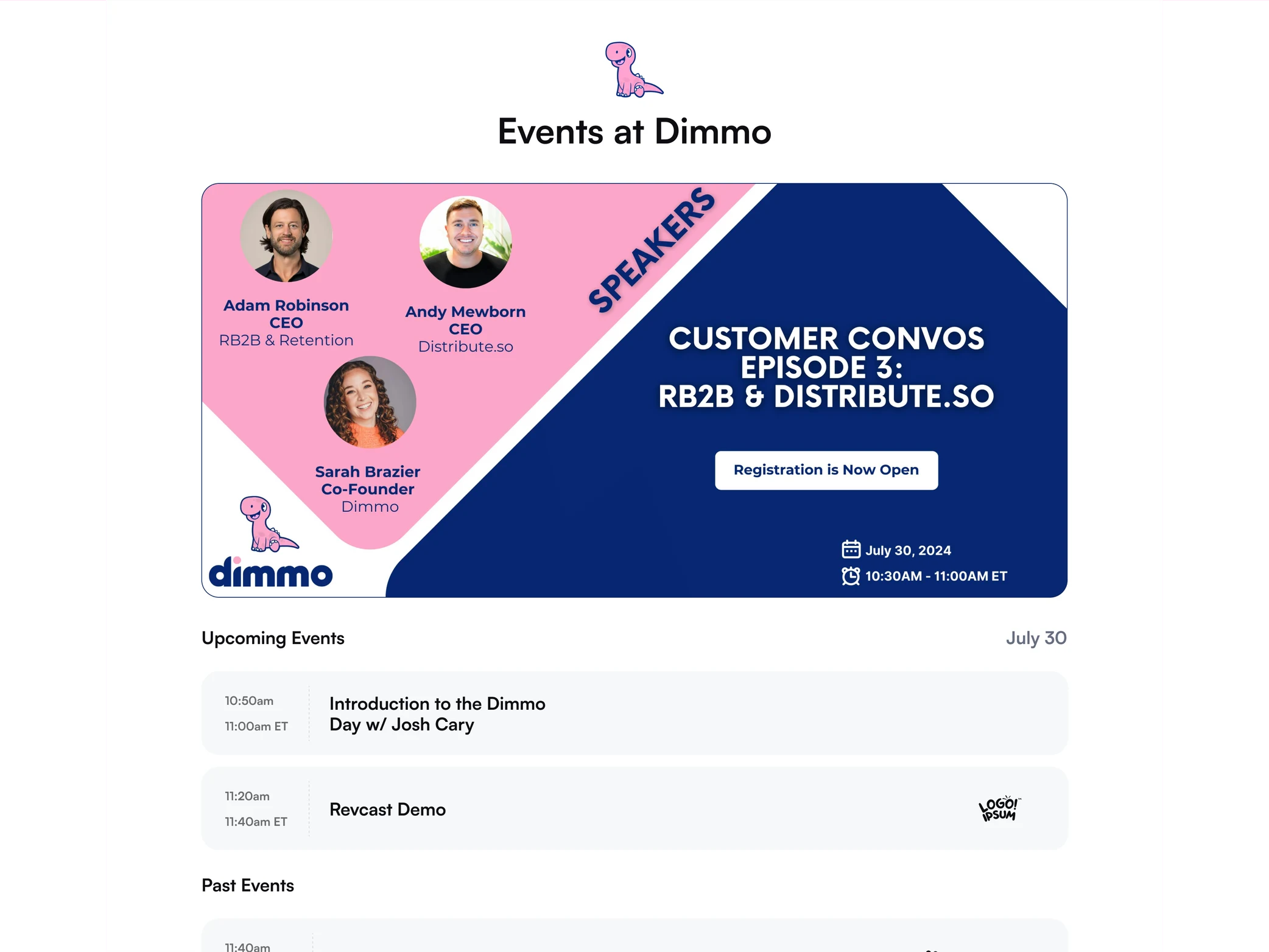
The UX overhaul was where the real work happened. We restructured information architecture so users could go from "curious" to "evaluating" without friction. Listing pages, demo pages, comparison flows — every interaction was redesigned with intent. Not decorative intent. Functional intent.
The UI followed the UX (as it always should). We built a visual system that communicated authority without being corporate, and approachable without being childish. The kind of design that makes you take a platform seriously the moment you land on it.
The website itself was a product — not a brochure site with a signup button stapled on. We designed it as a conversion engine that doubled as a brand statement: this is where smart teams make smart decisions.
And here's where it gets interesting: Dimmo later repositioned in market and had another agency build a new landing page for that pivot. But their software evaluation pages, listing pages, and demo pages? Still running on our design. Because when the product design works, you don't touch it
What We Actually Did
We embedded ourselves with Troy's team — brainstorming sessions, UX audits, deep-dives into how users actually navigate software evaluation. We weren't just designing screens; we were answering a harder question: How do you make a platform with 500+ listed tools feel simple, trustworthy, and worth someone's time?
The UX overhaul was where the real work happened. We restructured information architecture so users could go from "curious" to "evaluating" without friction. Listing pages, demo pages, comparison flows — every interaction was redesigned with intent. Not decorative intent. Functional intent.
The UI followed the UX (as it always should). We built a visual system that communicated authority without being corporate, and approachable without being childish. The kind of design that makes you take a platform seriously the moment you land on it.
The website itself was a product — not a brochure site with a signup button stapled on. We designed it as a conversion engine that doubled as a brand statement: this is where smart teams make smart decisions.
And here's where it gets interesting: Dimmo later repositioned in market and had another agency build a new landing page for that pivot. But their software evaluation pages, listing pages, and demo pages? Still running on our design. Because when the product design works, you don't touch it
What We Actually Did
We embedded ourselves with Troy's team — brainstorming sessions, UX audits, deep-dives into how users actually navigate software evaluation. We weren't just designing screens; we were answering a harder question: How do you make a platform with 500+ listed tools feel simple, trustworthy, and worth someone's time?
The UX overhaul was where the real work happened. We restructured information architecture so users could go from "curious" to "evaluating" without friction. Listing pages, demo pages, comparison flows — every interaction was redesigned with intent. Not decorative intent. Functional intent.
The UI followed the UX (as it always should). We built a visual system that communicated authority without being corporate, and approachable without being childish. The kind of design that makes you take a platform seriously the moment you land on it.
The website itself was a product — not a brochure site with a signup button stapled on. We designed it as a conversion engine that doubled as a brand statement: this is where smart teams make smart decisions.
And here's where it gets interesting: Dimmo later repositioned in market and had another agency build a new landing page for that pivot. But their software evaluation pages, listing pages, and demo pages? Still running on our design. Because when the product design works, you don't touch it
The Impact
Troy posted about working with us on LinkedIn, a founder with 40K+ followers publicly saying we played like an extension of his team. That post pulled 130+ likes and a flood of comments. In the agency world, that's not a testimonial. That's a case study in itself.

The Impact
Troy posted about working with us on LinkedIn, a founder with 40K+ followers publicly saying we played like an extension of his team. That post pulled 130+ likes and a flood of comments. In the agency world, that's not a testimonial. That's a case study in itself.
The Impact
Troy posted about working with us on LinkedIn, a founder with 40K+ followers publicly saying we played like an extension of his team. That post pulled 130+ likes and a flood of comments. In the agency world, that's not a testimonial. That's a case study in itself.
Book a call or Fill the form
Calendar
Form
Calendar
Form

Have an idea in mind? Let’s talk.

Have an idea in mind?
Let’s talk.

Have an idea in mind?
Let’s talk.
Copyright 2026 © Weroast Design 2026. All Rights Reserved