
The thesis in one breath
Specific positioning plus one ICP focus beats multi-channel virality theater. Launches are overrated as standalone events. The homepage is the visible test of whether the story is sharp enough to earn a meeting - and most SaaS homepages fail that test not because they look bad but because the story underneath them is not specific enough.
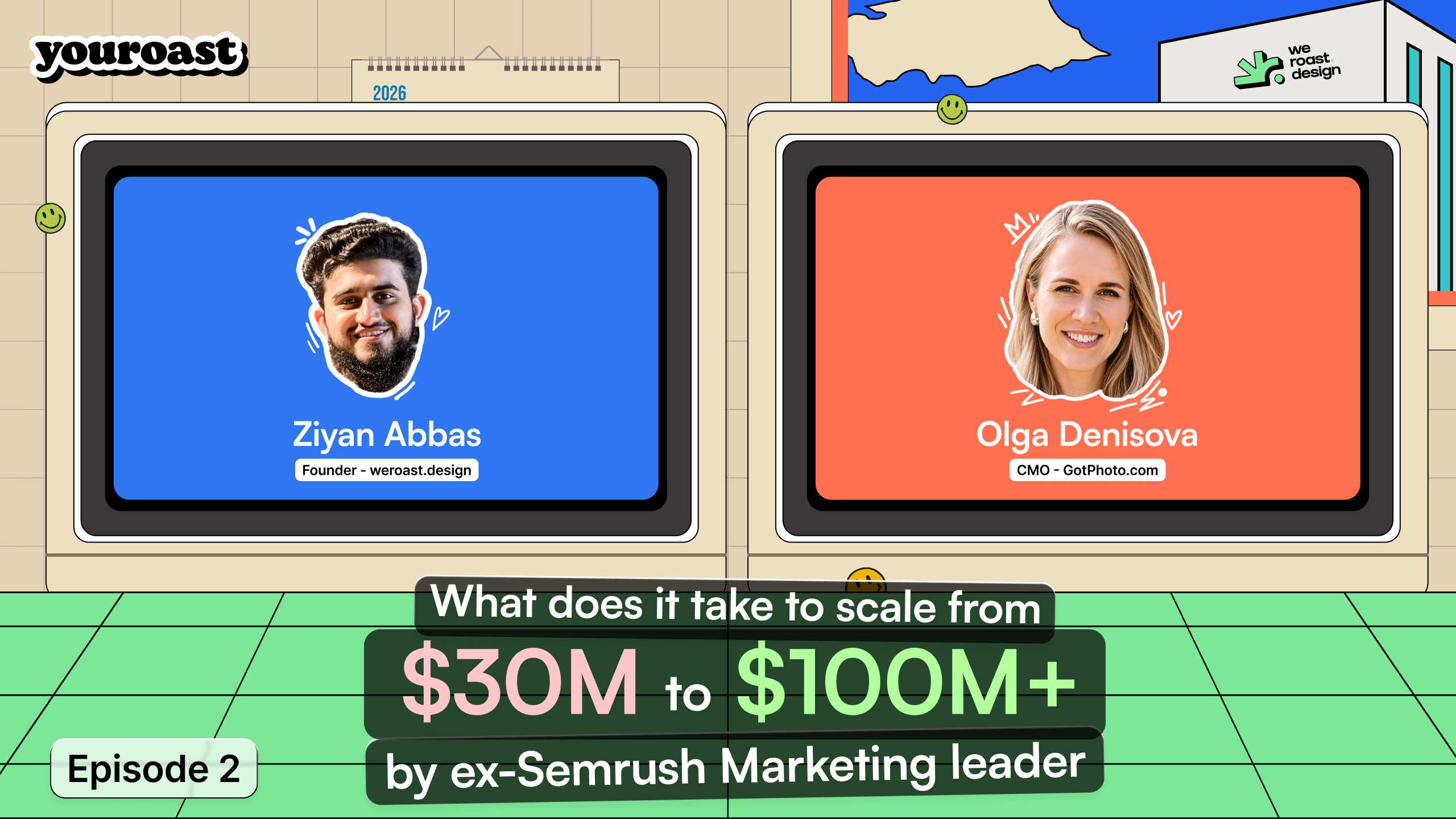
In episode one, Rob Kaminski, co-founder of Fletch PMM, and Ziyan Abbas walk through how B2B SaaS teams confuse channel noise with genuine word of mouth, what positioning work actually involves before a design or launch investment is made, and the specific litmus tests that reveal whether a story is ready to design against. The episode runs seventy-two minutes. The chapter timestamps above let you jump to the specific section most relevant to what you are working on.
One ICP is not optional
Rob's position on ICP is unambiguous and worth quoting in full: multiple ICPs is an oxymoron. You can have one ideal customer - the specific buyer for whom your product is the obvious, non-ignorable answer - and then secondaries who share enough characteristics that the same message reaches them. What you cannot have is five equally prioritized ICPs on the same homepage with a claim that is specific enough to earn the demo from any of them.
The mechanism is simple. A claim specific enough to resonate deeply with buyer A will feel slightly wrong to buyer B. A claim broad enough to reach both A and B will resonate shallowly with both. Shallow resonance produces long evaluation cycles, high churn, and a sales team that cannot qualify quickly because the ICP criteria are too broad to be useful filters.
Early-stage teams can and should experiment broadly to find the signal - to discover which buyer has the problem the product solves so well that they stay, pay, and tell colleagues. That experimentation is legitimate and necessary. The mistake is treating that experimentation period as a reason to keep the homepage broad after the signal exists.
Rob's rule: by Series A, or roughly at the point where GTM is a deliberate resource allocation decision rather than an exploratory one, put at least eighty percent of GTM on one ICP. The secondary segments can still be served. They should not be on the homepage until you have the resources to maintain distinct narratives for each without compromising the primary. Multi-segment marketing is a Series B-and-beyond capability, not a Seed decision.
For Weroast, this is why full website redesign and design system investment is treated as a post-PMF decision. A modular component system built around an unresolved ICP gets rebuilt when the ICP clarifies. See pre-PMF website design for the full reasoning.
Homepage equals memorable claim plus three reasons
Rob introduced the 2D versus 3D homepage distinction that runs through every Weroast sprint brief. The distinction is simple and almost universally violated by SaaS founders.
The homepage carries a 2D message: the simplest, most memorable version of your positioning, plus a handful of reasons to believe it, designed to earn the meeting - not to close the deal. Five to ten seconds of clarity. A cold visitor reads the hero, understands what the product does and who it is for, and decides whether to keep reading or request a demo. That is the full job of the 2D message.
The sales conversation carries a 3D message: dynamic, adaptive, tailored to the specific buyer and their specific situation. It handles objections, explores use cases, demonstrates depth, quantifies ROI, and makes the case specific to the room it is in. It is a different artifact for a different moment.
The founder's instinct is to put the 3D sales conversation on the homepage because they know the product deeply and want visitors to have the full picture. Every additional piece of context added to the hero makes the 2D claim less memorable and the five-second test harder to pass. The product's complexity is a reason for the hero to be simpler, not more comprehensive.
The practical test Rob recommends: hide the logo from your current homepage and show it to someone who does not know your company. Give them thirty seconds. Ask them to describe what you sell and who buys it. If they cannot, the hero is not ready for a visual upgrade - it is ready for a rewrite. This is the stranger test, and it is the most useful ten-minute positioning diagnostic a founder can run before spending money on design.
What to do next
Run the two litmus tests from this episode before you spend on design, ads, or a launch video.
Test one is the team survey. Ask everyone who will have input on a design sprint or a launch campaign to write down separately - without discussing - what your product does, who it is for, and what problem it solves. Compare the answers. If you get different answers from the founder, the PMM, and the head of marketing, you have a strategic alignment problem that no design agency can solve. Fix that first.
Test two is the stranger test. Find someone who does not know your company. Show them your homepage with the logo covered and give them thirty seconds to read. Ask them to describe what the company sells and who buys it. If they cannot, the hero is not ready for a visual upgrade.
When both tests pass, the story is specific enough to design against. That is when to book a sprint. See homepage design for SaaS for the focused homepage offer, or Website + Design System + Claude Setup if you already know the next twelve months require a pipeline of modular pages. Read website redesign prerequisites for the full checklist including all three litmus tests from this episode.
Why launches fail before they start
One of the sharpest observations from the episode is that most SaaS launch failures are positioning failures dressed as distribution failures. The launch video does not perform. The LinkedIn post gets low engagement. The Product Hunt placement does not drive signups. The team concludes the distribution was wrong - wrong channel, wrong timing, wrong format - and plans to fix it for the next launch.
The actual problem, in most cases, is that the claim the launch was built around was not specific enough to make a buyer stop scrolling. A launch video built on a vague claim produces polite engagement from people who appreciate the production quality and zero urgency from the buyer it was trying to reach. The problem was never the video. It was the claim the video was carrying.
Rob's framing: a launch is a forcing function for positioning clarity. If your team cannot write the bold claim - the single counter-positioned statement the launch hangs on - in one sentence that would stop a specific buyer mid-scroll, the launch is not ready. Producing the assets before the claim exists is the expensive version of discovering that the claim was wrong. Fix the claim first. The assets are cheap once the claim is right.
This is why Weroast's launch video process starts with bold claim extraction before a script line is written. The claim is the launch. Everything else is production.
The "kill Slack" problem
Rob raised a specific pattern in the episode that affects companies trying to position against a dominant incumbent. The "kill Slack" positioning - framing your product as the replacement for the category leader - is tempting because the category leader is what buyers already use, and contrast is a powerful positioning device.
The problem is that "kill X" positioning requires your product to be genuinely, demonstrably better at the core job the incumbent does. If it is not - if it is better at a specific adjacent job while the incumbent remains stronger at the core - the contrast positioning misleads buyers into evaluating against the wrong criteria. They compare you on the incumbent's terms and you lose, even when you would have won on your own terms.
The sharper move is to identify the specific buyer who has outgrown the incumbent at one specific job, name that job precisely, and make the claim around that job rather than around the incumbent's whole surface area. That buyer self-selects with urgency. Adjacent buyers who have not outgrown the incumbent do not self-select, which is the right outcome - they would have churned anyway.
Positioning before channel spend: the sequence that works
The full sequence Rob recommends, extracted from the episode and aligned with the Weroast sprint intake process:
Step one: lock the ICP. One dominant buyer. Secondaries can exist but do not drive the homepage or the primary channel investment. If the team survey produces three different ICP descriptions, stop here and run an internal alignment session before anything else.
Step two: lock the 2D claim. The simplest, most memorable version of what you do, for whom, and what changes for the buyer after they adopt it. Pass the stranger test. If it fails, the claim is not ready and no downstream investment - design, ads, outbound, launch video - will perform at the level the team expects.
Step three: choose one channel. The one where your ICP is already active and where the 2D claim has enough room to breathe. Not the one that seems most sophisticated or most scalable. The one that is most likely to produce a demo from the right buyer this week.
Step four: build the homepage around the locked claim and ICP. Not before. The homepage is the visible test of whether the positioning work is done. If the stranger test passes on the homepage, the positioning is ready. That is when to invest in design, ads, and launch assets. Not before.