

Two jobs one site must do
Every SaaS website has to do two jobs and most studios only solve one. The first job is a homepage with a visual identity so specific it cannot be replicated by an AI tool or a competitor with a different Figma template. That is the trust and perception layer - the thing that makes a cold visitor believe the product is real, credible, and worth a demo before they read a single feature. The second job is a component system so the team ships the next hundred pages - features, use cases, comparisons, integrations, campaigns - in the same design language without reopening a design retainer every time something new needs to ship. Prestige studios nail the first job and ignore the second. Subscription queues produce the second job one slow ticket at a time and never produce the first. This sprint delivers both in one pass. That is the positioning of this offer, and it is why we built it.
What is included
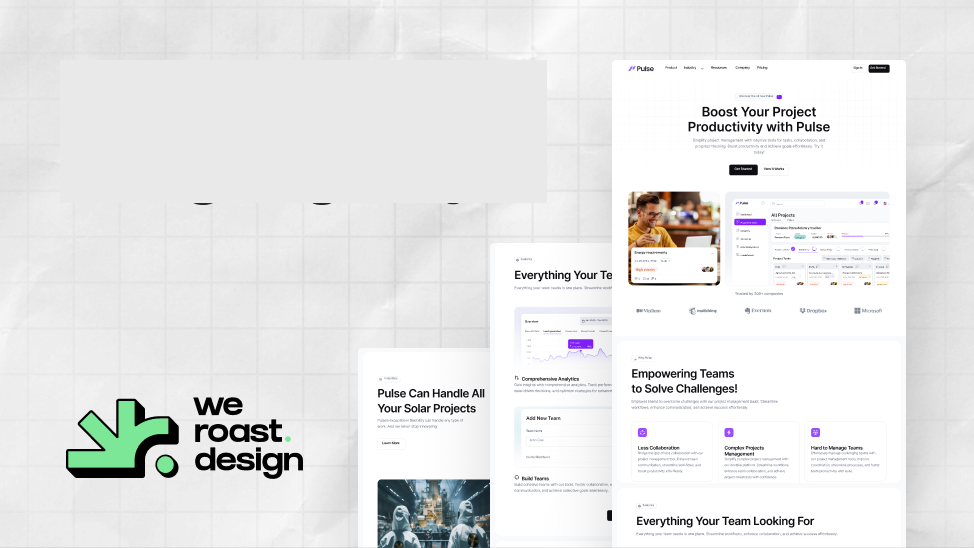
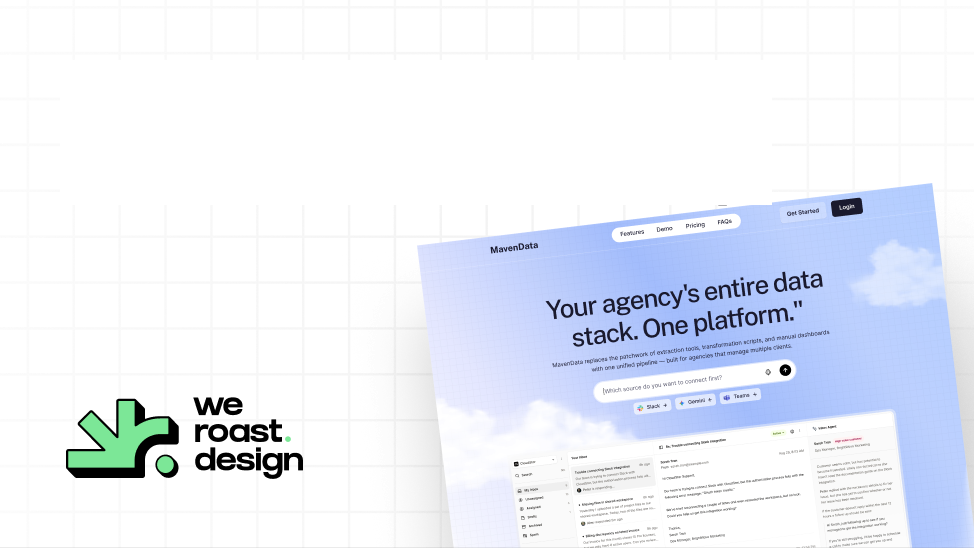
The sprint covers two phases. Phase one is the homepage: brand research, moodboarding, three design style explorations, full homepage UI/UX design across five responsive breakpoints, and a pixel-perfect Figma handoff. Phase two is the system: strategic mapping of every section type your team will need to build in the next twelve months, design of 15 to 20 modular component sections in the locked design language, a full Figma design system with tokens and components, and custom Claude instructions tied to your Figma structure so your team can generate on-brand pages without reopening discovery. Development is available as an add-on depending on stack and timeline. The Claude setup is not a generic AI page builder prompt. It maps your specific design tokens, section structure, and brand voice rules into Claude instructions tied to your actual Figma system. Output stays in your design language, not a template SaaS aesthetic.
- Homepage with distinctive visual language
- 15-20 modular sections, Claude-ready library
- Figma design system with tokens and components
- Claude prompts and structure for on-brand page generation
- Pixel-perfect, dev-ready handoff
Who this is for
This offer is built for post-PMF SaaS and AI companies at Seed to Series B who have answered the ICP question, have a working positioning statement, and know they will need to ship a pipeline of marketing pages in the next twelve months. The typical buyer is a PMM or head of marketing who has been blocked by the retainer model: every new feature page or comparison page means another brief, another round of design, another invoice. The Claude system breaks that dependency. Your team can generate feature pages, use-case pages, and comparison pages in your exact design language - with Claude handling the scaffolding and your Figma component library handling the visual rules. Pre-PMF teams should start with the homepage sprint if they insist on spending money on design. The full system assumes positioning is sharp enough to design against. If it is not, the component library gets built around a brief that will change in three months.
How this differs from a homepage sprint
The homepage sprint solves one URL. It is the right scope when the bottleneck is conversion clarity on a single page. This offer solves the next twelve months of marketing velocity. The difference is not just scope - it is the thing you own after delivery. A homepage sprint produces a converting homepage and a foundational design system. This offer produces all of that plus 15 to 20 modular sections and Claude instructions that make your marketing team self-sufficient for page production. The sequence matters: buy the homepage sprint first if your message is still being tested. Buy this system once the homepage message proves itself in market and you know the pipeline of feature, use-case, and comparison pages is real. Clients who have gone through this sprint describe the delivery as an embedded team. Cory Pitt at Wiser AI said we work fast, high-quality, and know their stuff - a combination he called rare. Troy Munson at Dimmo called the sprint an extension of their team and said the agency is damn good at what they do.
What clients say


Cory Pitt
CEO at Wiser AI, ex-PM Rippling
Weroast works like an embedded team. Fast, high-quality, and they know our stuff. That combo is rare. I'm glad we found them.

Troy Munson
Founder at Dimmo
They've been amazing to work with, have made the process easy, brainstormed on UX ideas with us, and truthfully played as an extension of our team. If you're looking for a design and dev agency that's damn good at what they do, check them out.

Anton
Founder at Sonora, ex-PM of Salesforce
Working with them has been effortless. They're sharp, proactive, and genuinely invested in our success. From UX ideas to technical implementation, they've nailed every detail.

Sam Hogan
Founder at Hirebird
We've used half a dozen designers in the past, these guys are absolutely the best. We always come back to WeRoast. Fast, professional and they pay attention to the details that matter.
What to do next
If your positioning is locked and you know the next twelve months will require a pipeline of marketing pages, book a sprint call and we scope based on your page count, copy readiness, and implementation requirements. If you are not sure whether to start with the homepage sprint or the full system, read the homepage design for SaaS page for the decision framework. If you want the full methodology behind the system, read how to build a scalable SaaS website with Claude. If you are comparing Weroast against Clay or a similar prestige studio, the Weroast vs Clay comparison makes the scope difference explicit.
Website + Design System + Claude Setup
A premium website, modular design system, and custom Claude setup

What it includes
$10-$20k for website with homepage + 15-20 modular sections. Varies depending on requirements.
Complete website design and development with 15-20 modular sections, a design system, and Claude setup so your team can generate pages in your brand language without us.

 Comprehensive Brand Research & Moodboarding
- Design-style brainstormings + selection
- Full Website UI/UX Design
- Flawless Mobile & Tablet Responsiveness
- Strategic Mapping of Reusable Website Sections
- 15-20 modular sections, Claude-ready library
- Full Design System Extension
- Custom Claude AI Setup for Rapid Page Creation
- Autonomous Scaling (Replace us)
- Pixel-Perfect, Dev-Ready Figma Handoff

 Replace us
FAQ
Can’t find your answer?
Book a call and let’s talk
A distinctive homepage, a Figma design system with tokens and components, 15 to 20 modular component sections designed in your exact brand language, and Claude instructions tied to your Figma structure so your team generates on-brand pages without us. Exact scope varies with copy readiness, page count, and implementation requirements. Discovery confirms the final quote. See the pricing page for the full breakdown of factors that change the quote.
Yes. Homepage only starts at $3,749. Homepage plus development is $5,127. Both are lighter offers on the same sprint structure. The right starting point is the homepage when your message is still being tested in market. Move to the full system once the homepage proves itself and you know the pipeline of pages is real. See homepage design for SaaS for the homepage sprint offer.
Development is available as an add-on depending on your stack and timeline. The sprint can include a production-ready Next.js build with CMS, analytics, and launch deployment. Confirm on the discovery call whether development is in scope for your project.
A generic AI page builder produces pages that look like every other SaaS site because it has no context about your specific brand. Our Claude setup maps your design tokens, section structure, component names, and brand voice rules into Claude instructions tied to your actual Figma system. When your marketing team uses it, the output stays in your non-conventional design language - not a template that could belong to any SaaS product in your category.
It means your marketing team can ship a new feature page, a use-case page, or a comparison page in your exact design language without briefing us, waiting on availability, or paying another invoice. Claude handles the scaffolding using your component library. Your team reviews and publishes. No retainer required. No design dependency. That is the bold claim of this offer and the reason we built it.
Phase one - the homepage sprint - runs nine days. Phase two - the design system and Claude setup - runs days nine through fourteen. The full system is delivered in two weeks from brief to handoff when positioning inputs and approvals are ready and on schedule.
Need help deciding what to build first?
Book a sprint call and we will map the right scope for your launch stage.
Book a Sprint